



info@litaishoes.com
86-15613206703
Glamping has moved from a travel trend to a mainstream accommodation category. For resort operators, campsite owners and experience-led destinations, that means tents are no longer a one-off purchase — they are inventory that has to earn its keep across seasons, handle guest expectations, and pass the same safety and compliance bar as any guest room. This guide lays out the procurement framework we use with buyers who are fitting out a glamping site at scale, so the brief you send to a glamping tent manufacturer actually maps to what gets delivered.
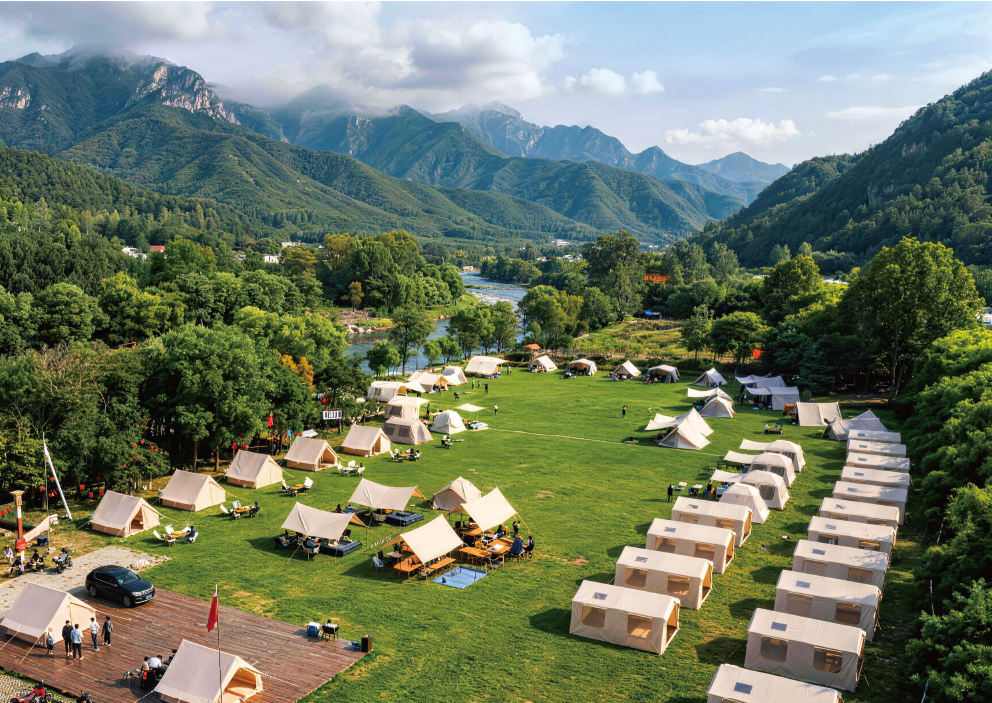
If you are sourcing for a commercial site, the questions below are the ones that separate a tent that looks good in a catalogue from one that survives a full operating season with paying guests. For sourcing support or a custom quote, contact info@litaishoes.com.
The single most common procurement mistake is choosing a tent shape first and an operating model second. Start with how the unit will be sold and used:
Each model drives a different specification for layout, fabric grade and interior fit-out. A glamping tent supplier can only quote accurately once this is fixed.
For commercial glamping, the three structures in play are inflatable air-beam, steel/aluminium frame, and bell or Safari canvas. The trade-off is operational, not decorative:
Most resort buyers we work with standardise on one structure per zone to keep training, spares and housekeeping consistent. Pick the structure that matches your staffing model, not just the look.
Capacity is a planning decision, not a spec-sheet afterthought. Map each unit type to the number of guests it serves, then work backwards to site density — how many units fit a hectare without crowding the guest experience or breaching local spacing rules. A clear capacity plan lets the factory advise on the right model mix and helps you forecast revenue per site rather than per tent.
Be explicit about the operating window. A tent rated for a Mediterranean summer is a different product from one expected to run in a cold-region shoulder season or a high-humidity coastal site. Tell the supplier the temperature range, wind exposure and whether the unit stays installed year-round. This is the input that determines fabric grade, ventilation and any thermal lining — and it is far cheaper to specify up front than to retrofit after a season of complaints.
For paid accommodation, the interior is the product. Procurement should lock down:
Ask the glamping tent manufacturer for a layout drawing per unit type before commit, not a generic photo.
Guest accommodation carries a higher compliance bar than event or storage use. For tents slept in by paying guests, confirm the fabric fire-retardancy standard the destination market expects — common references include CPAI-84 (USA), NFPA 701, EN 71 and BS 5852. Get the test certificate, not just the claim, and check it matches the actual fabric batch. This is the item most often missed in a first RFQ and the one inspectors ask for first.
Glamping is a brand experience. Most resorts want the tent to read as theirs: logo print, colour-matched trim, custom entrance, even private-label packaging for owned stock. Confirm with the supplier what is printable, what is dye-matched, and whether custom work affects MOQ or lead time. A good glamping tent supplier treats customisation as a standard line item, not a special favour.
Batch the first order to the launch phase, but agree the reorder terms up front. Ask for the realistic production window, the MOQ for a repeat order (it is often lower than the first), and how the factory handles a mid-season top-up. For a seasonal business, a supplier who can ship a small replenishment in weeks is worth more than a slightly cheaper one locked to container-only runs.
Operational continuity is what protects your investment. Before signing, confirm: the warranty period and what it covers, the spare-parts list (air pumps, beams, zippers, panels), and whether spares ship separately from full units. A site that can self-heal a failed unit in days keeps revenue flowing; one waiting on a full container does not.
Once the above is decided, send the factory a single brief rather than a wish list. Include: operating model per unit type, structure preference, capacity, climate window, layout drawing notes, fire-standard target market, branding requirements, and target launch date. A complete brief is what turns a quote into a deliverable — and it is the fastest way to compare two glamping tent manufacturers on like for like.
It depends on the market. CPAI-84 and NFPA 701 are common US references; EN 71 and BS 5852 appear in European and UK contexts. Ask for the certificate tied to the actual fabric batch, and confirm the local authority's expectation before specifying.
For most commercial sites, yes. One structure per zone keeps training, housekeeping, spares and warranty simple. Mixed structures are viable but raise operational overhead that shows up in labour cost and slower turnaround between guests.
Typically yes — logo print, colour-matched trim and custom entrances are standard customisation items with most manufacturers. Confirm printable surfaces and any MOQ or lead-time impact before you commit the launch date.
Start from guests-per-unit and site density, then let the factory propose models that meet that plan. Capacity and spacing are planning inputs; exact dimensions are the factory's response to them, not the starting point.
Ready to brief a manufacturer or compare options for your site? Email info@litaishoes.com with your operating model and launch window — we will return a specification-aligned quote and a sample plan.

Contact: Litai
Phone: 15613206703
E-mail: info@litaishoes.com
Whatsapp:
Add: Tianjin Wuqing District entrepreneurial headquarters base c05