



export@cntjtent.com
+86 15613206703
Choosing an inflatable tent manufacturer is not simply a price comparison. For distributors, outdoor brands, glamping operators, rental companies and project buyers, the supplier you select will influence product durability, return rates, delivery performance and the reputation of your own business. Two air tents may look similar in photographs, yet differ significantly in air-beam construction, fabric specifications, seam sealing, valve reliability and production control.
This B2B guide provides a practical framework for evaluating an inflatable tent manufacturer before sampling, customization or bulk ordering. It focuses on the questions that help buyers compare suppliers using measurable information rather than marketing language.
Quick answer
A reliable inflatable tent supplier should be able to document the air-beam system, shell fabric, waterproof construction, anchoring design, inspection process, OEM scope, production lead time and after-sales procedure. Buyers should approve a complete sample and a written specification sheet before confirming mass production.
This checklist is designed for businesses purchasing inflatable camping tents for resale or commercial use, including:
Outdoor equipment importers and wholesale distributors
Camping and lifestyle brands developing private-label collections
Glamping sites, campgrounds and outdoor accommodation operators
Tent rental companies and event equipment suppliers
E-commerce sellers building a premium family-camping range
Procurement teams purchasing temporary outdoor accommodation
Each buyer has a different risk profile. A retailer may prioritize packaging, visual consistency and low return rates. A glamping operator may focus on interior space, serviceability and long-term use. A rental fleet may require fast installation, replaceable components and simple cleaning. Your supplier evaluation should begin with the final use case.
A meaningful quotation requires more than a target size and color. Before contacting an inflatable tent supplier, prepare a short product requirement document covering capacity, floor area, climate, use frequency, sales market and expected customization.
Important decisions include:
Application: family camping, glamping, commercial rental, outdoor hospitality or project use
Capacity and layout: sleeping area, living area, doors, windows, partitions and awnings
Operating conditions: rain exposure, wind, temperature range and seasonal use
Fabric requirement: material type, denier, coating, color and UV considerations
Packed transport: target carton size, gross weight and shipping method
Market requirements: labeling, instructions, warning information and relevant test reports
Without a written requirement, different manufacturers may quote different materials and accessories, making a price comparison misleading. Ask every shortlisted factory to quote against the same specification.
The air-beam structure is the functional core of an inflatable tent. It replaces traditional rigid poles and must maintain shape while allowing controlled flexibility under outdoor loads. Buyers should ask for a clear explanation of the beam material, protective sleeve, joint construction and inflation system.
What material is used for the inner air tube?
Is each beam individually replaceable or connected as one system?
How is the inner tube protected from abrasion and twisting?
What working pressure does the manufacturer recommend?
What type of inflation and pressure-release valves are used?
How long is the standard pressure-hold inspection?
Are repair patches, spare valves or replacement beams available?
Do not evaluate a beam only by how firm it feels immediately after inflation. A professional sample review should also check pressure retention over time, valve sealing, beam alignment, sleeve fit and ease of deflation. The operating pressure must be clearly stated in the instructions so users do not overinflate the system.
Fabric descriptions such as “heavy duty” or “waterproof” are not sufficiently precise for a purchase contract. Request the actual base fabric, denier, coating type, color and finished weight where applicable. Oxford fabric is commonly used for family and commercial air tents because it can balance durability, appearance and packability, but the correct specification depends on the intended market.
Water resistance is a complete construction issue, not only a fabric coating. The buyer should inspect:
Seam treatment and consistency around roof panels
Reinforcement at guy-line, corner and anchoring points
Zipper covers and rain flaps
Window, roof opening and awning transitions
Floor-to-wall connection and ground contact areas
Drainage paths that prevent water from collecting on the roof
Ask the manufacturer how waterproof performance is checked during development and production. If a specific rating or compliance claim is important to your market, include the test method and acceptance requirement in the purchase specification instead of relying on a brochure statement.
Commercial success depends on the complete user experience. A spacious tent can still perform poorly if the entry is too low, ventilation is limited, the awning collects water or the packed product is difficult to handle.
During sample review, set up the tent in the way an end user would. Check the number and position of doors, insect-mesh panels, roll-up windows, ventilation openings, internal height, usable floor shape and access to valves. Confirm that tension straps, guy lines and anchor points can be identified and adjusted without confusion.
For family camping and glamping models, ventilation deserves special attention. Airflow paths should reduce condensation while maintaining weather protection. Large doors and mesh windows improve comfort, but every opening also requires carefully designed rain protection and reliable zipper construction.
A fabric cutting cannot demonstrate structural balance, sewing quality or inflation performance. Before a wholesale order, approve a complete production-representative sample with the proposed materials, colors, accessories, labels and packaging.
A useful sample inspection should include the following steps:
Record carton condition, packed dimensions, product weight and supplied accessories.
Inflate the tent using the intended pump and measure the actual setup time.
Compare overall dimensions, doors, windows and internal layout with the drawing.
Inspect sewing, seam treatment, reinforcement patches, webbing and zipper operation.
Check all valves for accessibility, sealing and controlled deflation.
Leave the tent inflated for the agreed observation period and check beam stability.
Pitch the guy lines and anchoring system to assess the complete structure.
Deflate, repack and confirm that the instructions are practical for a first-time user.
Document every requested correction in a sample approval sheet. Photographs, measurements and component references help prevent misunderstandings when the approved sample is transferred to mass production.
The terms OEM, ODM and private label are often used broadly, so buyers should define exactly what customization is required. Common options for custom inflatable tents include:
Custom shell and trim colors
Logo printing, woven labels and product badges
Model dimensions and internal layout adjustments
Door, window, awning and partition configurations
Fabric, coating and accessory upgrades
Branded carry bags, cartons, manuals and barcode labels
Market-specific instruction languages and packaging marks
Ask which changes can be made using an existing pattern and which require new development. Structural modifications need more engineering review than a color or logo change. The manufacturer should provide a clear approval process for drawings, colors, artwork and pre-production samples.
The lowest unit price does not always produce the lowest landed cost. A quotation should state the included tent specification, pump, pegs, guy lines, repair materials, carry bag, carton, labeling and other accessories. It should also identify the trade term, packing quantity and quotation validity.
MOQ may vary according to fabric color, printing, packaging and structural customization. Ask whether multiple models or colors can be combined and whether the supplier uses stocked materials or requires material production. This information affects both minimum quantity and lead time.
Lead time should be separated into sample development, material preparation, mass production, inspection and shipment preparation. For a seasonal camping program, build in time for sample correction and transport rather than planning only around the factory production date.
A reliable OEM air tent manufacturer should be able to explain how quality is controlled at different stages. The exact procedure varies, but a sound system normally covers incoming materials, in-process workmanship, functional inflation checks and final packing inspection.
| Stage | What the Buyer Should Verify |
|---|---|
| Incoming material | Fabric specification, color, air-tube material, valves, zippers and accessories |
| Cutting and sewing | Panel accuracy, seam consistency, reinforcement and component placement |
| Inflation inspection | Valve sealing, beam shape, pressure retention and structural alignment |
| Final inspection | Dimensions, appearance, accessories, labels, instructions and packing |
For larger orders, agree on inspection timing and acceptance criteria before production. A golden sample, signed specification sheet and approved artwork set provide a common reference for the buyer, factory and inspection team.
Inflatable tents are relatively large packed products, so packaging affects freight cost, warehouse handling and end-user satisfaction. Confirm packed dimensions and weight using the finished sample, not an early estimate.
Review the carry bag, carton strength, moisture protection, accessory organization and product identification. The model name, color, quantity, gross weight, carton dimensions and buyer marks should be consistent across the product, inner documents and outer carton. If the product will be sold online, packaging must also withstand parcel handling and repeated movement through distribution centers.
Good communication is part of product quality. During the quotation and sampling stage, note whether the supplier answers technical questions directly, records revisions and identifies risks before production. Vague answers at the sample stage often become expensive problems during mass production.
Ask how the manufacturer handles spare valves, replacement air beams, repair kits and confirmed production defects. Buyers operating rental fleets or glamping sites may need a different spare-parts plan from a retail distributor. The procedure should be practical, documented and appropriate for the intended service life of the product.
The quotation uses general terms but provides no material specification.
The supplier will not confirm working pressure or pressure-test procedures.
Product dimensions and included accessories change between documents.
Every customization request is accepted without technical review.
The sample differs from the specification but the changes are not documented.
Lead time is promised without checking material availability.
Packaging dimensions are estimates rather than measurements of a finished unit.
There is no clear contact for quality issues or replacement components.
Which inflatable tent models are already in stable production?
What materials are used for the shell, floor, air tube and protective sleeve?
What is the recommended working pressure and valve configuration?
How is pressure retention checked before packing?
How are seams and critical stress points reinforced?
Which waterproofing or performance tests can be arranged?
What OEM changes are available without structural redevelopment?
What are the MOQ requirements for custom colors, logos and packaging?
What does the quoted price include?
What are the sample and mass-production lead times?
How is final inspection documented?
Which spare parts and after-sales solutions are available?
A supplier should help match product size to the buyer's application instead of recommending one model for every customer. Compact inflatable tents can suit smaller camping groups and entry-level retail programs, while larger formats provide more living space for family camping, glamping and commercial accommodation.
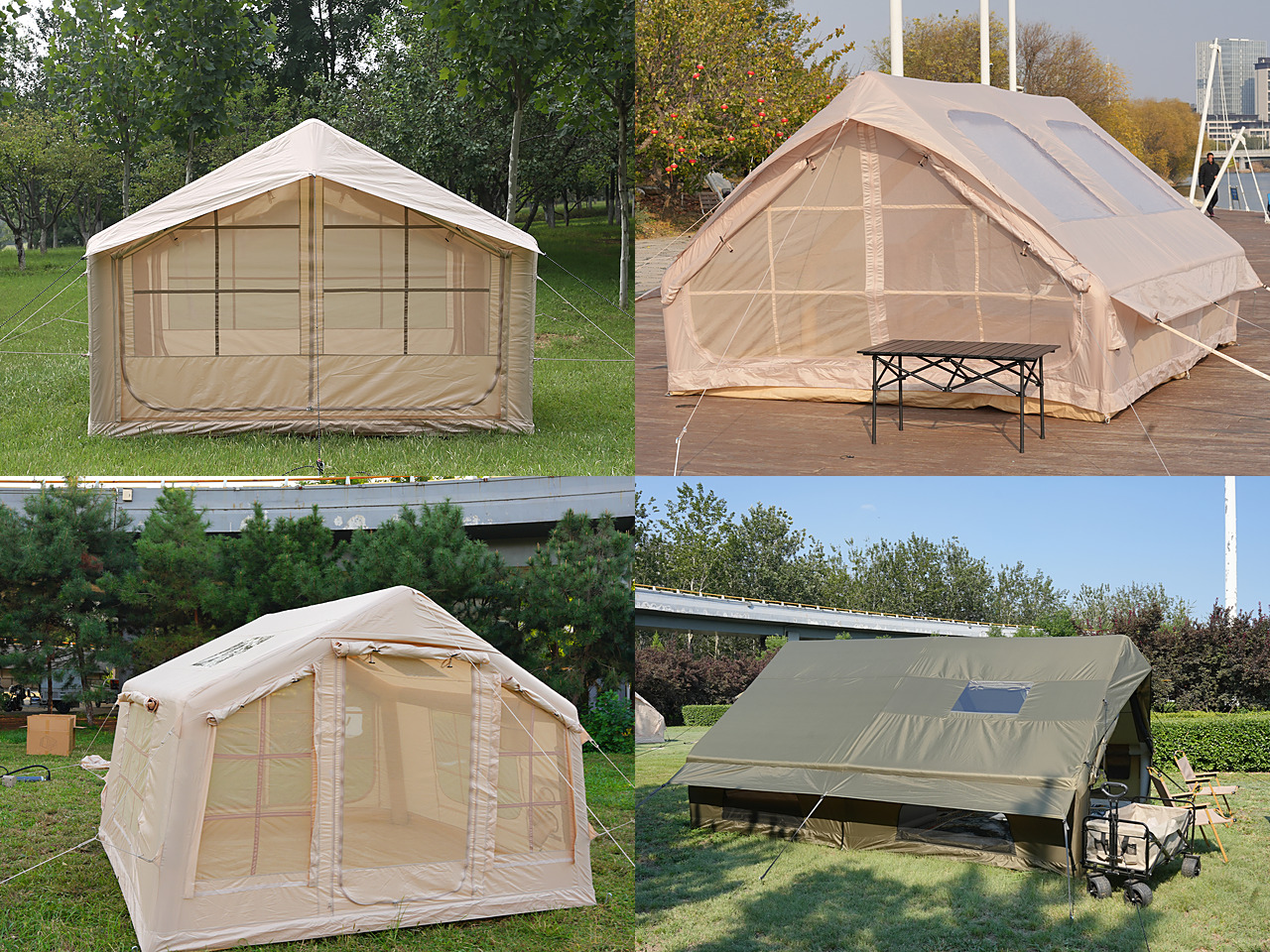
Tianjin Tent Outdoor Products offers an inflatable tent range covering approximately 6.3, 7.5, 8, 12, 13.68 and 17.28 m². Buyers can compare available models on our inflatable tent product page and review the broader outdoor tent collection.
The most dependable sourcing decision is based on evidence: a clear requirement, documented materials, a complete sample, measurable inspection criteria and consistent communication. Price remains important, but it should be compared only after the product specification and included services are aligned.
If you are sourcing wholesale inflatable tents for distribution, private label, family camping, glamping or commercial outdoor use, send your target size, quantity, market and customization requirements to export@cntjtent.com. Our team can recommend suitable models and prepare product information for your project.
Contact: Litai
Phone: 15613206703
E-mail: export@cntjtent.com
Whatsapp: +86 15613206703
Add: Tianjin Wuqing District entrepreneurial headquarters base c05