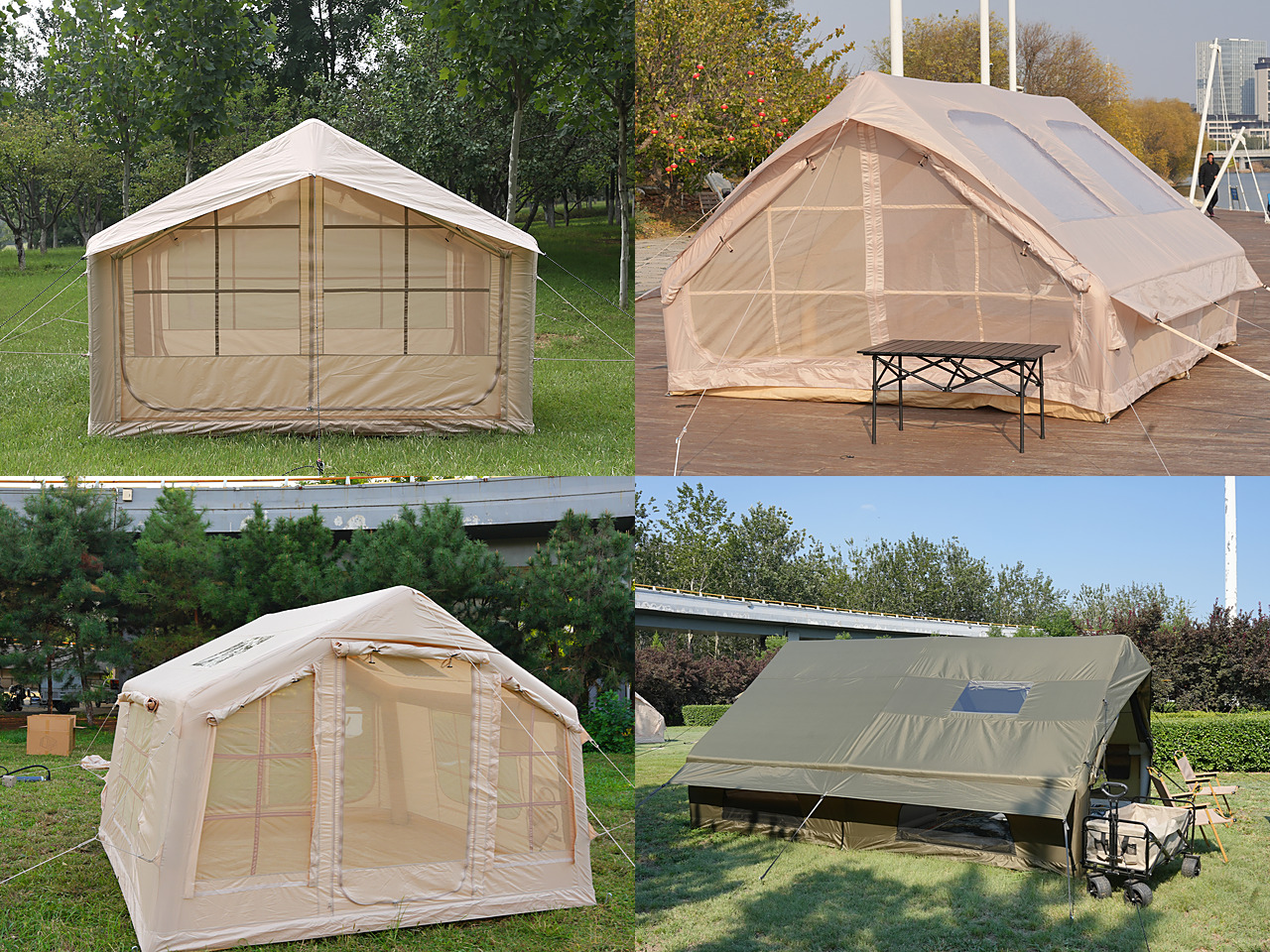
Inflatable Tents for Glamping Sites and Outdoor Accommodation Businesses
inflatable tents can give glamping sites and outdoor accommodation businesses a practical way to create distinctive guest units without relying on a conventional rigid-frame structure. Their air-beam architecture can simplify the pitching process, while cabin-style interiors support beds, furniture and branded guest experiences.
Selecting a glamping inflatable tent is a commercial procurement decision. Operators must evaluate climate, site infrastructure, cleaning, storage, spare parts, local compliance and total operating cost. This guide provides a practical framework for resorts, campsites, rental fleets and project buyers.
Key principle: buy for repeatable operations. The right commercial air tent should fit the guest concept, withstand the intended setup cycle, be easy for staff to inspect and clean, and have a clear plan for spare parts and weather procedures.
Why Inflatable Tents Appeal to Glamping Businesses
A well-selected inflatable cabin tent combines a distinctive guest experience with flexible seasonal deployment. Air beams replace many rigid frame parts, while different sizes can serve couples, families and premium guests. These benefits still depend on correct anchoring, inspection, maintenance and weather procedures.
1. Define the Guest Product Before Choosing the Tent
Start with the accommodation concept. A couples’ retreat with one queen bed needs a different layout from a family unit with multiple beds, a rental tent delivered to events or a premium suite with seating and luggage furniture.
Create a scaled plan that includes:
bed dimensions and access on both sides where required;
luggage racks, tables, chairs and any hospitality equipment;
a clear route from the door to the sleeping area;
space around valves and inflatable beams for inspection;
ventilation openings that remain unobstructed;
housekeeping and emergency access.
Floor area alone is not enough. Wall angle, internal height, door position and beam layout determine how much of the nominal area can be used productively.
2. Build a Size Portfolio Instead of Buying One Model for Every Guest
A commercial site often performs better with a controlled mix of sizes. Smaller units can target couples and shorter stays; medium units can serve families; larger units can become premium inventory with higher perceived value.
Size Class
Commercial Positioning
Operational Consideration
6.3–8 m² Compact guest unit, mobile rental or entry tier Efficient pitch use; limited furniture
About 12 m² Couples’ suite or family base unit Balanced comfort and transport requirements
About 13.68 m² Comfort or family upgrade More cleaning, furnishing and storage volume
About 17.28 m² Premium suite or spacious family accommodation Large pitch, anchoring plan and higher logistics demand
A pilot deployment helps operators confirm guest feedback, setup time and housekeeping workflow before committing to a larger fleet.
3. Evaluate the Complete Construction
Air beams and pressure system
Review beam diameter, valve design, inflation sequence, operating pressure guidance and field replacement procedure. Staff should be able to identify leakage, isolate a problem and follow the manufacturer’s repair instructions.
Outer fabric and floor
Fabric choice affects weight, feel, durability, drying time and weather performance. Oxford fabric specifications can suit frequent commercial handling, while other materials may support a different guest aesthetic. Compare coatings, seams, zippers and floor construction as a system.
Doors, mesh and ventilation
Guest comfort depends on airflow, privacy and insect control. Check whether mesh panels, curtains and doors can be operated easily after furniture is installed. Multiple openings may also help staff orient the unit to different plots.
Replaceable components
Ask which beams, valves, poles, guylines, stakes, zippers and repair materials can be supplied separately. A commercial tent is easier to manage when the operator has a defined spare-parts kit rather than replacing an entire unit for a local problem.
4. Design the Pitch as Part of the Product
The guest buys the complete experience, not the tent alone. The pitch should provide level ground, drainage, safe access, appropriate anchoring and clearance from vegetation or hazards. Include room for guy lines, awnings and staff movement.
Operators should document:
the approved footprint and anchor positions for each model;
ground preparation and drainage requirements;
walkway, lighting and emergency access;
wind, rain and severe-weather procedures;
inspection frequency and responsible staff;
rules for heaters, cooking devices and electrical equipment.
Local planning, fire, electrical, occupancy and accommodation regulations vary. Obtain qualified local advice before opening units to guests.
5. Create a Repeatable Setup and Inspection SOP
Commercial consistency comes from a standard operating procedure. Each unit should be installed, checked and documented the same way, regardless of which staff members are on duty.
Inspect the groundsheet area and remove sharp objects.
Position the tent according to the approved plot plan.
Inflate using the specified pump, sequence and pressure guidance.
Install stakes, guy lines, awnings and accessories according to instructions.
Check beams, valves, zippers, seams, floor and ventilation openings.
Record the inspection and any maintenance action.
Repeat weather and anchor checks at the interval defined by the operator.
Training should include deflation, packing, drying, basic repair and conditions that require a unit to be taken out of service.
6. Plan Housekeeping, Drying and Storage
Turnover time affects commercial performance. Provide a drying area for the largest model, never store a wet tent, label components and keep repair records by unit. Storage racks must support the packed weight without crushing valves or fittings.
7. Calculate Total Cost of Ownership
Compare total cost, including freight, customs, site preparation, furniture, pumps, spare parts, labor, cleaning, storage and expected downtime.
Consider these operating metrics during a pilot:
staff minutes required for setup and breakdown;
cleaning and drying time per guest turnover;
maintenance events per occupied night;
replacement-part consumption and downtime;
guest satisfaction and revenue by size tier.
This information allows a buyer to compare tents based on operational value rather than unit price alone.
8. What to Ask an Inflatable Tent Manufacturer
Before placing a wholesale or OEM order, provide the supplier with a structured project brief and request clear documentation.
Target country, climate and operating season.
Guest capacity and planned furniture layout.
Required floor area, door and window configuration.
Fabric, color and branding preferences.
Expected setup frequency and storage conditions.
Included pump, repair kit, stakes, lines and accessories.
Available replacement beams, valves and fabric parts.
Packaging dimensions, order quantity and delivery schedule.
Inspection, testing and quality documentation.
A detailed brief helps the manufacturer recommend a suitable model and identify where OEM changes may affect price, minimum order quantity or production time.
9. A Practical Procurement Process
Define the concept: guest profile, price tier, season and furniture plan.
Shortlist sizes: compare compact, family and premium layouts.
Confirm technical requirements: materials, structure, openings, accessories and spares.
Order samples or a pilot batch: test on the real site with operating staff.
Measure performance: setup, cleaning, maintenance and guest feedback.
Finalize the fleet: standardize models, spare kits, documentation and training.
Use OEM customization only when it supports a clear guest or operating requirement. Brand colors, logos, openings, accessories and packaging may be available, but standardizing pumps, valves and repair materials across models simplifies training and inventory.
Frequently Asked Questions
Are inflatable tents suitable for commercial glamping?
They can be suitable when the model, site, climate, anchoring and operating procedures are aligned. Commercial buyers should test the product in real conditions and verify local regulatory requirements.
What size is best for a glamping tent?
It depends on the bed, furniture and guest category. Around 12–13.68 m² can support comfortable furnished layouts, while 17.28 m² offers more premium zoning. Compact 6.3–8 m² units may suit couples, rentals or entry tiers.
What spare parts should a glamping site keep?
The list depends on the model, but may include compatible valves, air-beam components, repair materials, stakes, guylines, pumps and selected hardware. Agree on the spare-parts plan with the supplier before fleet deployment.
Can an inflatable tent be customized for a resort brand?
OEM options may include colors, logos, fabric, openings, accessories and packaging. Feasibility, minimum order quantity and production time should be confirmed for the specific project.
Planning a glamping or rental project? Send your guest capacity, site climate, layout, preferred size, target quantity and customization requirements to Tianjin Tent Outdoor Products Co., Ltd. at export@cntjtent.com . We can discuss model selection, wholesale supply and OEM options.