



export@cntjtent.com
+86 15613206703
An inflatable tent is easier to manage when maintenance is treated as part of every camping trip or guest turnover. A tent that looks clean can still contain moisture in its folds, grit around a valve or abrasion beneath an air beam. These small problems deserve attention before the next setup, especially when the tent supports a rental fleet or a glamping operation.
This guide explains how to clean, dry, inspect and store an air tent, and how to approach a suspected leak without making the damage worse. Always use the instructions supplied for your particular model: fabric coatings, air-column materials, valve designs and repair methods differ. A maintenance routine should protect those components rather than assume that every inflatable tent uses the same construction.
Inspect the tent while it is still standing. Walk around the outside and check the roof, seams, guyline attachment points, doors and lower wall panels. Look for rubbing marks, stretched stitching, standing water and places where fabric contacts a sharp object. Inside, examine the floor corners and the protective sleeves around the air columns. Photograph anything that changes between inspections.
Use a simple record with the tent model, unit number, inspection date, observed condition and action taken. For commercial use, record who checked the tent and whether it is ready for the next guest. This makes recurring problems easier to identify and keeps a damaged unit from returning to service by mistake.
Brush off loose leaves and dry dirt with a soft brush. Grit trapped in folds and around zippers can act like an abrasive when the tent is packed or moved. Empty pockets, remove loose equipment and shake debris from the floor carefully. Never drag a loaded tent across a pitch to save packing time.
For general cleaning, begin with clean water and a soft cloth or sponge. If a cleaning product is necessary, use one explicitly suitable for the fabric and coating and test a small inconspicuous area first. Avoid assuming that household detergents, solvents, bleach or a pressure washer are appropriate. Aggressive cleaning can harm coatings, seams or printed surfaces even when it removes visible dirt.
The roof may feel dry while the underside of the groundsheet, a rolled door or a seam fold remains damp. Open doors and ventilation panels where conditions allow, wipe away surface water and give concealed areas time to dry. Check the floor underneath beds and storage boxes, and inspect the surfaces that were against the ground.
If you must leave a wet campsite, pack for transport and reopen the tent as soon as practical in a suitable drying area. A wet transport pack should not become long-term storage. For rental operations, include drying space and drying time in the turnover schedule; otherwise an apparently available tent may not actually be ready for another booking.
The air system needs protection from sharp objects, contamination and inappropriate pressure. Before inflation, examine the pump hose and connection, clear debris from the valve area and confirm that the fitting is compatible. Inflate according to the model-specific pressure instructions using the appropriate pump or gauge. Firmness by hand is not a reliable substitute for the manufacturer's specified procedure.
Temperature changes can alter the feel of an inflated beam. A softer beam on a cool morning does not by itself prove that the tent is leaking. Compare observations under similar conditions and follow the manufacturer's instructions before adjusting pressure. Do not keep adding air merely to achieve maximum stiffness, and do not open or remove structural components while they are pressurized.
If an air column repeatedly loses support, stop using the tent until the cause is understood. Check the accessible valve closure and connection first, following the manual. Record which chamber is affected, how quickly support changes and the surrounding conditions. This information is more useful to the supplier than a general report that the tent has become soft.
Where the manufacturer permits it, an approved leak-detection method can help locate an accessible leak. Do not apply an unknown chemical or dismantle a beam simply to search faster. If a repair requires removing a bladder or separating components, obtain the correct instructions first. A protective outer sleeve and an internal pressure-retaining component have different functions and should not be treated as interchangeable repair surfaces.
PVC, TPU, coated textiles and other components may require different repair products. A patch that bonds to one material may fail on another. Confirm the damaged component, the approved patch and adhesive, the surface preparation method and the required curing conditions. Keep the tent out of service until the repair has cured and passed the supplier's recommended check.
Damage at a valve, a structural attachment or a major seam may need professional service or component replacement. A temporary field measure should be documented and assessed again before the next use. For fleets, keep compatible spare parts identified by model so that an apparently similar valve or replacement beam is not installed without verification.
Keep zipper tracks free from sand and avoid forcing a slider against excessive fabric tension. If a door becomes difficult to close, check the pitch and guyline tension before pulling harder. Use only a lubricant approved for the zipper and adjacent material if lubrication is needed.
Clean transparent panels with a suitable soft cloth and avoid abrasive rubbing. Inspect guyline points, straps and buckles after use. Replace worn accessories with components appropriate for the tent. These small parts influence how loads are transferred through the structure and should be included in routine inspections rather than checked only after a failure.
Once the tent is clean and fully dry, deflate it using the correct sequence and avoid sharp folds around valves or fittings. Follow the supplied folding instructions and pack poles, pegs and tools separately so they cannot puncture the fabric or air system. Do not force the tent into a bag by standing on vulnerable components.
Choose a dry, ventilated storage location away from direct heat, chemicals and pests. Label the bag with its model and inspection status. Store any unit awaiting repair separately from ready-to-use equipment. Before a new season, allow time for a complete setup and inspection instead of discovering a missing fitting or slow leak at the customer's campsite.
After every use: remove debris, check for damage, clean as needed and dry completely before storage.
Before every setup: inspect the air system, fabric, floor and accessories, and confirm the correct pump and instructions are present.
After unusually demanding conditions: inspect seams, attachment points and the air system before returning the tent to use.
Before seasonal storage and reopening: carry out a full inspection and update repair and inventory records.
A damp tent may need to be packed temporarily for transport, but it should be reopened and dried promptly. Check hidden folds and the underside of the floor before long-term storage.
No. Temperature, valve condition and other factors can affect apparent firmness. Follow the model instructions and investigate repeated pressure loss methodically rather than guessing.
Do not assume so. Repair compatibility depends on the component and material. Confirm the approved method with the supplier before applying a patch or adhesive.
For questions about an inflatable tent from Tianjin Tent Outdoor Products Co., Ltd., email export@cntjtent.com with the model, photos of the affected area and a description of the conditions. Buyers planning a fleet can also request the applicable care instructions, spare-part options and repair procedures before ordering.
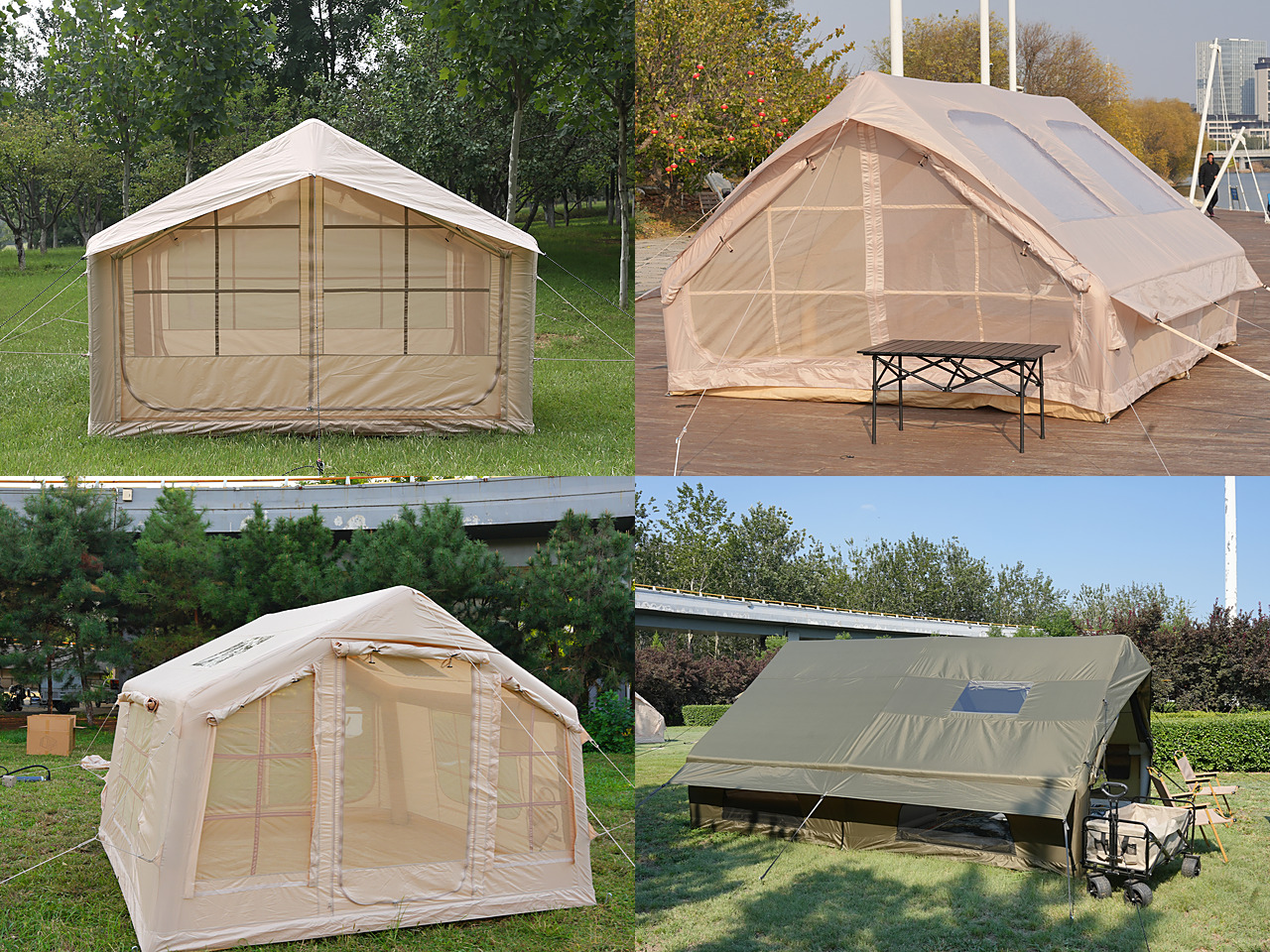
Illustration: conceptual glamping setting; site layout and equipment may differ from the supplied product.
Contact: Litai
Phone: 15613206703
E-mail: export@cntjtent.com
Whatsapp: +86 15613206703
Add: Tianjin Wuqing District entrepreneurial headquarters base c05