



export@cntjtent.com
+86 15613206703
Choosing the right outdoor shelter is an important decision for camping businesses, event rental companies, glamping operators and outdoor accommodation providers. inflatable tents and traditional pole tents can both provide reliable protection, but they offer different advantages in setup efficiency, labor requirements, transport, maintenance and long-term operating cost.
What Is an Inflatable Tent?
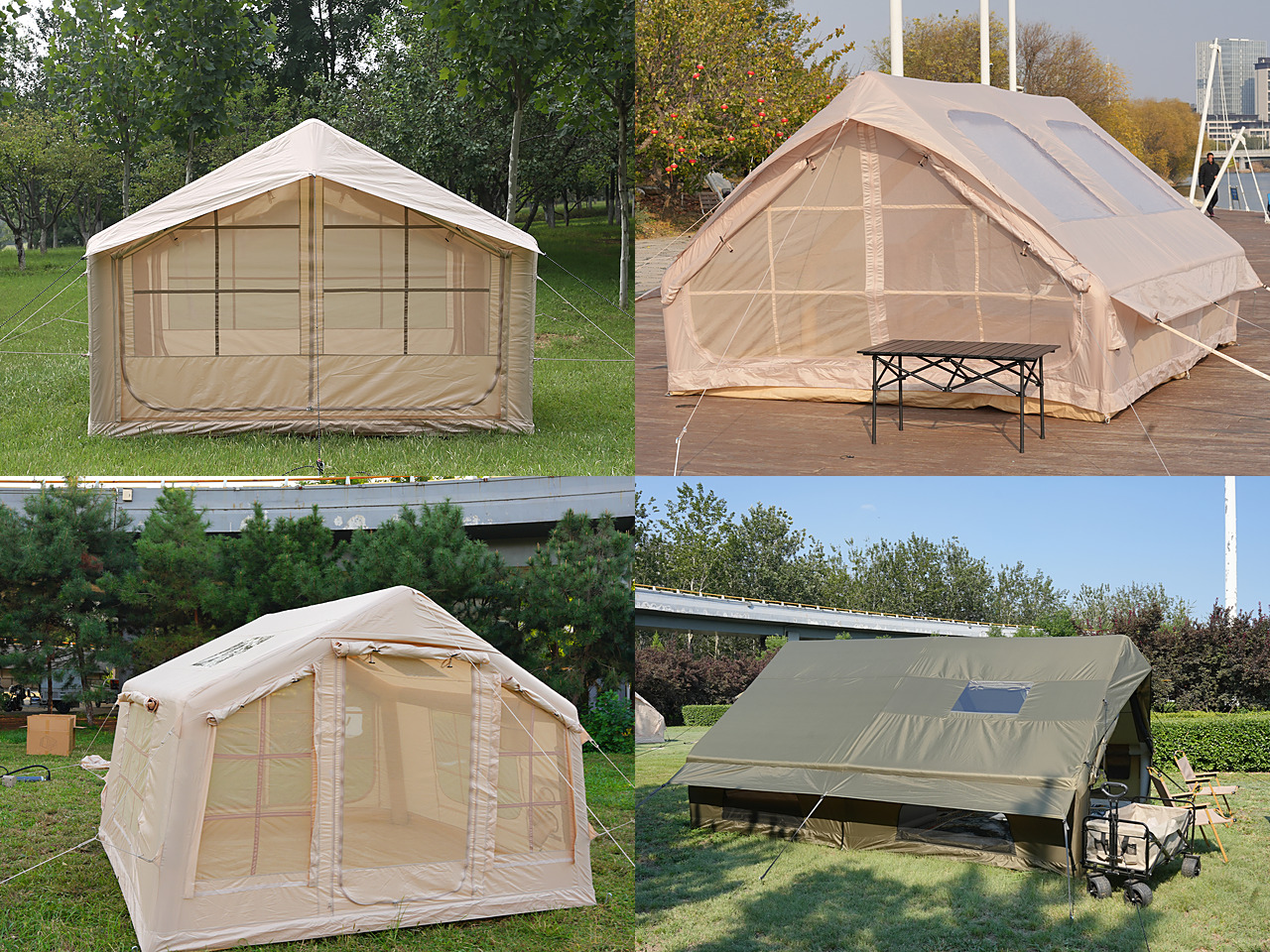
An inflatable tent uses air-filled structural beams instead of conventional metal or fiberglass poles. After the air beams are inflated with a compatible pump, they form the main supporting frame of the tent. Modern inflatable camping tents can include reinforced fabric, waterproof seams, ventilation panels, windows, doors and flexible interior layouts. They are suitable for family camping, glamping accommodation, outdoor events and rental fleets.
What Is a Traditional Pole Tent?
A traditional pole tent relies on metal, aluminum, steel or fiberglass poles to support the roof and walls. The frame is assembled manually before the fabric cover is tensioned and secured with ropes, stakes or other hardware. Pole tents are widely used for parties, exhibitions, weddings, markets and outdoor events. They can be practical when a trained installation team and suitable storage space are already available.
Setup Time and Labor Requirements
Setup time is one of the clearest differences between an inflatable tent and a traditional pole tent. An inflatable tent normally requires the operator to lay out the fabric, connect the pump, inflate the air beams and secure the guy lines. With a clear installation procedure, a small team can complete the setup efficiently.
A traditional pole tent requires workers to sort the poles, connect the frame, position roof supports, attach the fabric and adjust the tension. Larger structures may require more workers and additional installation time. For rental companies and glamping sites, faster setup can reduce labor cost, speed up turnover between customers and make it easier to move between locations.
Stability and Weather Protection
Both tent types can provide dependable outdoor protection when they are correctly installed and anchored. Performance depends on fabric quality, seam construction, structural design, anchoring and site conditions. Inflatable tents use continuous air beams that distribute support around the structure and leave the center of the interior open. Traditional pole tents can also perform well when their poles, ropes and stakes are correctly positioned.
Buyers should consider local wind exposure, ground conditions, anchoring options, waterproof fabric, ventilation, condensation control and the recommended operating conditions. Correct installation and routine inspection are essential for every outdoor shelter.
Transport, Storage and Maintenance
Inflatable tents are often convenient for transport because the air beams deflate and the tent can be packed into a compact storage bag. This is useful for mobile camping operators, event rental fleets and businesses serving multiple locations. Traditional pole tents require separate storage for the fabric, poles, ropes, stakes and accessories.
For an inflatable tent, operators should inspect air valves, connection points, air-beam sleeves, zippers, guy lines and anchor points. For a pole tent, operators should check bent poles, loose connectors, worn ropes, damaged stakes and fabric tension points. Cleaning, drying and correct storage help extend the service life of either type.
Interior Space and User Comfort
A major benefit of an inflatable camping tent is its open interior layout. Air beams are positioned around the perimeter, leaving more usable central space for beds, tables, chairs, storage or camping equipment. This makes inflatable tents a strong option for family camping, glamping accommodation, temporary guest rooms, outdoor lounges and hospitality areas.
Traditional pole tents may include center poles or additional frame components that reduce layout flexibility, although they remain useful for large event spaces with a fixed interior plan. Buyers should compare usable floor area, not only external dimensions. Door position, windows, internal dividers and ventilation openings all affect comfort.
Total Cost Beyond the Purchase Price
The lowest purchase price does not always represent the lowest total cost. A complete comparison should include the initial price, installation labor, setup and removal time, transportation, storage, replacement parts, cleaning, maintenance, training and expected frequency of use.
An inflatable tent may provide better long-term value for a business that needs frequent installation, fast site changes and a smaller operating team. A traditional pole tent may suit buyers who already own compatible equipment, have an experienced installation crew or use the structure in one fixed location.
Which Tent Is Right for Your Business?
Choose an inflatable tent when you need fast and repeatable setup, a spacious interior without many center poles, easy transportation, a professional glamping appearance or flexible use for camping and hospitality. A traditional pole tent may be suitable when you need a familiar frame system, large event coverage, existing pole-tent equipment or a budget-focused solution for occasional use.
Before ordering, confirm the floor area, fabric material, waterproofing, structural system, pump or pole requirements, number of doors and windows, ventilation, anchoring method, spare parts, packaging and lead time with your supplier.
Conclusion
Inflatable tents and traditional pole tents can both support successful outdoor projects, but they are designed around different operating priorities. Inflatable tents focus on fast setup, flexible transport, open interior space and efficient commercial operation. Traditional pole tents remain practical for established event teams and fixed-location applications.
For camping companies, glamping operators, rental businesses and wholesale buyers, comparing the complete operating process is essential. A well-designed inflatable camping tent can reduce installation complexity while creating a comfortable and professional outdoor environment. For model recommendations, OEM cooperation or wholesale inquiries, contact export@cntjtent.com.
Contact: Litai
Phone: 15613206703
E-mail: export@cntjtent.com
Whatsapp: +86 15613206703
Add: Tianjin Wuqing District entrepreneurial headquarters base c05