



export@cntjtent.com
+86 15613206703
The unit price is agreed, the deposit is paid, and production is running. Then the shipment arrives and the problems start: cartons that do not match the packing list, accessories missing, no spare valves, and a damaged unit nobody can claim for because nobody photographed the pallet on arrival.
None of that is caused by shipping. It is caused by details that were never confirmed before the order left the factory. This guide covers what wholesale buyers should agree in writing about packing and shipping — the information you need, the questions to ask, and the checks to run when the goods land.
Packing is usually discussed last, when everything else is settled. That is a mistake, because packing affects cost, freight method, warehouse space and what your team can do on the day of delivery.
Ask for the packed size of a single unit and its net weight, not just the carton total. You will need this to plan storage, to calculate your own onward shipping, and — for resale — to print accurate packaging information. Confirm whether the weight given is net or gross.
Request an itemised packing list: tent body, air beams if packed separately, pump, pegs, guy lines, repair kit, carry bag, instructions. Accessories are the most common discrepancy at delivery. Agree in writing whether the pump is packed inside the tent carton or separately, and in what quantity.
Confirm how many units are packed per carton and the carton material and strength. If you are distributing onward to individual customers, you may want one unit per carton with your own labelling. If you are delivering straight to your own site, bulk packing may be cheaper and less wasteful.
Ask how the tent is protected inside the carton: folded how, wrapped in what, whether there is a moisture barrier, and whether sharp accessories are packed so they cannot abrade the fabric in transit. Long sea voyages in humid conditions are hard on coated fabrics.
Agree the shipping mark, carton numbering (for example carton 3 of 40), and what appears on the outside: model, colour, quantity, gross and net weight, dimensions. If the outer carton is plain, your warehouse team has to open every box to find anything.
Confirm which documents will be provided and when: commercial invoice, packing list, certificate of origin if required for your market, and any test reports or conformity documents you agreed in the order. Ask for draft copies before shipment so errors can be corrected while there is still time.
State the trading term clearly in the order — FOB, CIF, DDP or other — and confirm what each side pays for and where risk transfers. Most cost disputes between buyers and factories are not about price; they are about a delivery term nobody defined precisely.
Ask your supplier how many cartons the order will produce and their total volume and weight, then let your forwarder plan the loading. Do not estimate container quantities yourself — how a mixed order actually loads depends on carton dimensions and stacking, and that is your forwarder's job to calculate.
If you are ordering spare valves, repair material or extra pegs, confirm whether they travel in the same cartons, in a separate marked carton, or in a later shipment. A small parts carton that is not listed on the packing list will be the one that goes missing.
Do this before the goods are moved into storage or signed for as accepted:
Usually yes. Tell your supplier before production if you need single-unit cartons, retail-ready packaging, or your own labelling, since it changes how the order is packed and handled.
Yes, where possible. Small parts add negligible volume to a shipment but are disproportionately expensive and slow to send separately later.
Your freight forwarder should, using the carton count, dimensions and weight your supplier provides. Ask your supplier for those figures and hand them to the forwarder rather than estimating yourself.
Photograph before unloading, note it on the delivery document, and inform your supplier and forwarder immediately with the photographs. Claims are far harder once the goods have been accepted and moved.
Not practically. Inspect a representative sample thoroughly, check carton counts and documentation for all of it, and fully pitch one unit. Report anything unusual straight away.
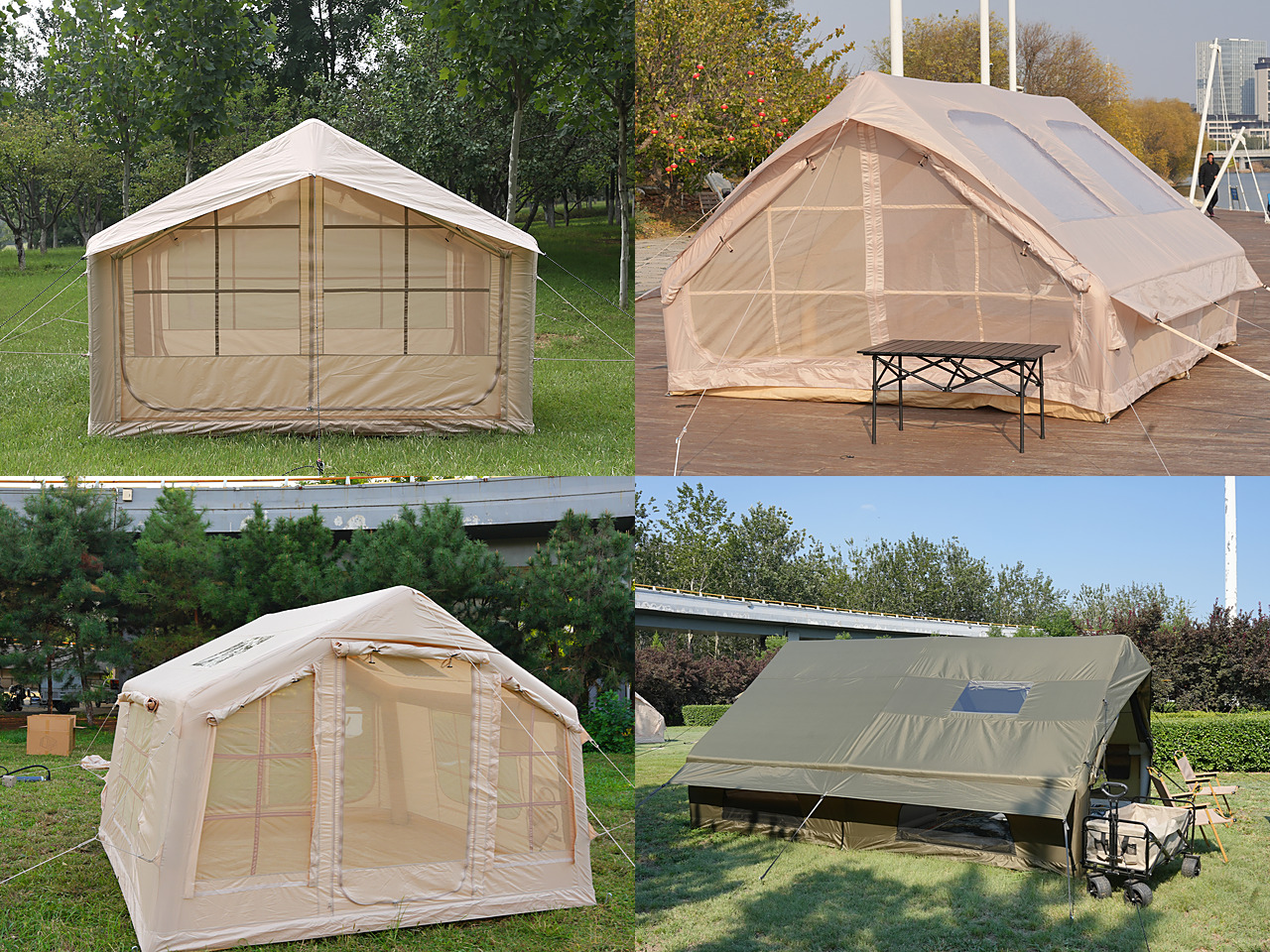
We supply inflatable tents, air tents and glamping tents to campsites, resorts, rental operators and distributors, and we confirm packing details, carton specifications and documentation in writing before every shipment.
Email: export@cntjtent.com
Contact: Litai
Phone: 15613206703
E-mail: export@cntjtent.com
Whatsapp: +86 15613206703
Add: Tianjin Wuqing District entrepreneurial headquarters base c05