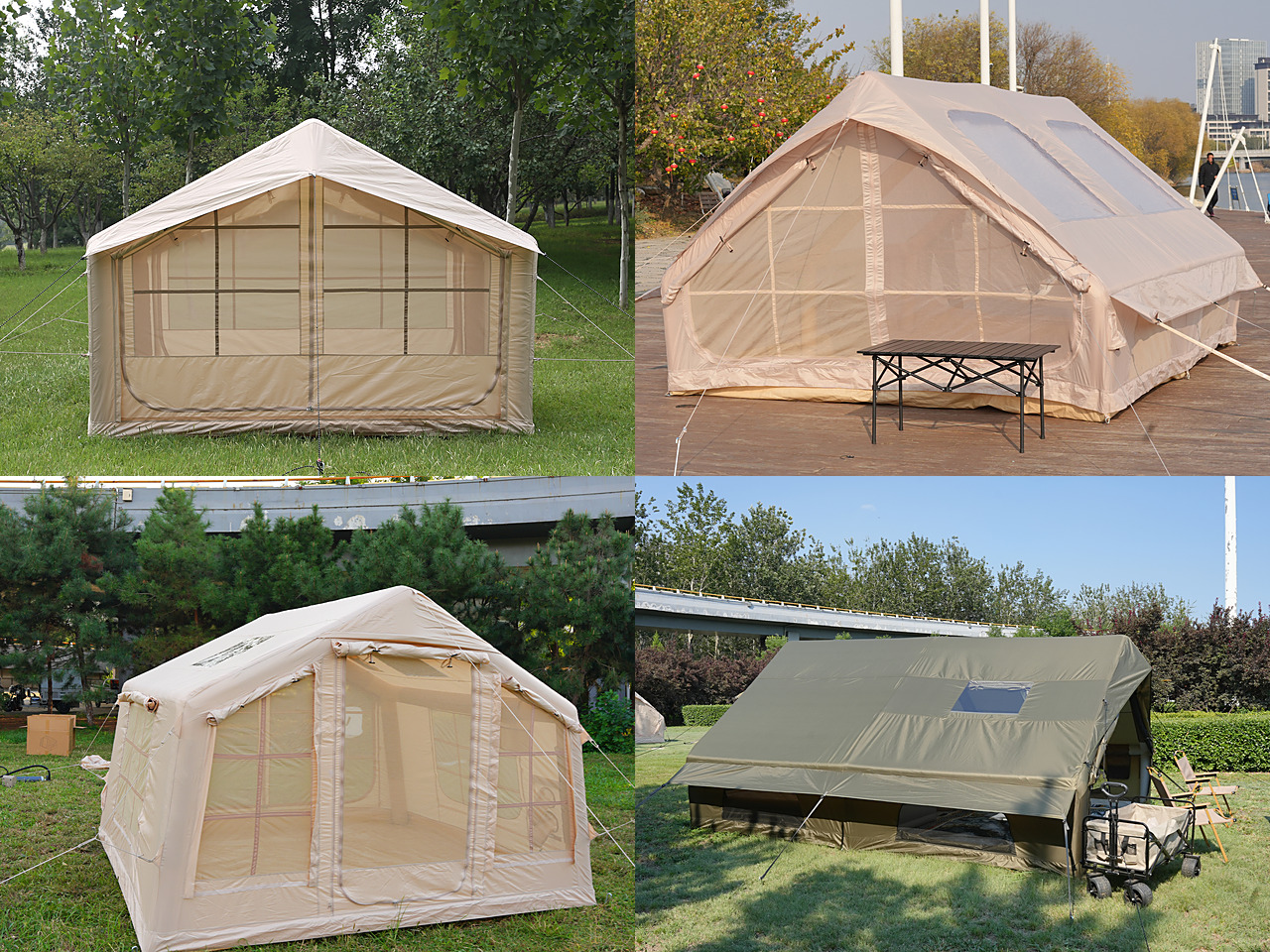
Payment Terms and Risk Control for Your First Order from a Chinese Tent Factory
Payment Terms and Risk Control for Your First Order from a Chinese Tent Factory
Price and specification get most of the attention in a sourcing conversation, but the payment structure is where a first order either goes smoothly or goes wrong. The good news is that most of the risk on a inflatable tent order can be controlled without paying more — through the sequence of payments, the documents attached to each step, and two or three checks that take minutes. This guide is written for importers and brand owners placing a first order with a Chinese tent manufacturer.
To discuss terms for a specific order, contact export@cntjtent.com.
1. The Structures You Will Actually Be Offered
- T/T with deposit and balance — typically 30% deposit, 70% before shipment (or against a copy of the bill of lading). This is the industry default for repeat business and for orders in the tens of thousands of dollars.
- L/C at sight — common for larger orders, for buyers whose internal rules require it, or where the importing country expects it. It costs bank fees on both sides and adds document handling time, so it is rarely used for small first orders.
- Platform trade assurance — useful for a first transaction because payment is held by a third party until shipment conditions are met; the trade-off is that it only covers orders placed through that channel.
- Full payment before production — should be avoided on a first order unless the value is small.
2. What the Deposit Actually Buys
A deposit is not a goodwill payment; it is what allows the factory to commit. On a tent order it typically covers:
- Fabric booking. PVC tarpaulin and oxford are bought in batches, and a custom colour is reserved against your deposit.
- Production slot. Your order is scheduled into a line run, displacing other work.
- Setup costs. Printing screens, cutting patterns and packaging plates are paid for upfront.
Understanding this makes the negotiation easier: a supplier can be flexible on the deposit percentage if the material is a stock colour, but much less flexible if it has to book a custom dye lot.
3. Milestones That Keep Both Sides Honest
| Stage | Typical trigger | What you should receive |
|---|
| Sample | Spec agreed | Sample fee invoice, sample build, revised spec sheet |
| Deposit | Sample approved | Proforma invoice, signed specification, production schedule |
| Production | Materials booked | Progress photos, fabric batch record, in-line QC report |
| Pre-shipment | Goods packed | Inspection report, packing list, loading photos or video |
| Balance | Before release of documents | Bill of lading copy, commercial invoice, certificate copies |
4. Free Risk Controls You Should Always Use
- A signed specification sheet. Every material, colour, dimension and accessory listed on one document, referenced in the proforma invoice. It is the reference point for any claim.
- Verify bank details by voice. Email interception on first orders is real. Confirm the account name matches the legal entity on the contract, and call to confirm any change.
- Pre-shipment inspection. Either your own inspector or a third party, against an agreed AQL. It is far cheaper than discovering problems after the container lands.
- Loading evidence. Photos or short video of cartons being loaded, with carton count visible.
- Keep a retained sample. The approved sample stays with the factory as the sealed reference; keep a second one on your side.
5. Incoterms: What Changes With Each Choice
- EXW — lowest factory price, but you control and carry all collection, export clearance and freight risk. Only practical if you have a freight partner in China.
- FOB — the standard for most buyers: factory handles export clearance and loading, you control the ocean freight and insurance from the port.
- CIF — convenient, but you lose visibility of the freight cost and usually pay for it inside the unit price. Fine for a first small shipment, less transparent at scale.
Ask for the same order quoted on FOB and CIF once; the difference tells you what the freight component is really costing.
6. Red Flags Worth Acting On
- A last-minute change of bank account, especially with urgency attached — always verify by phone, never by reply email.
- A unit price far below every other quote, with no willingness to break it down by material.
- Refusal to allow any inspection before shipment, or refusal to put the specification in writing.
- Pressure to pay 100% upfront “to lock the price this week” on a first transaction.

7. A Sensible First-Order Pattern
For most buyers the lowest-stress sequence is: sample and specification first → trial quantity in a stock colour → 30/70 T/T with inspection before the balance → then move to your custom colour and larger volume once the product and the supplier are both proven. It costs a little more per unit on the first round and saves considerably more in avoided mistakes.
To talk through payment structure, inspection and delivery terms for your order, write to export@cntjtent.com. LITAIANTOUR is an inflatable tent manufacturer in Tianjin, China, supplying camping, glamping and trade-show tents to importers, distributors and site operators worldwide.