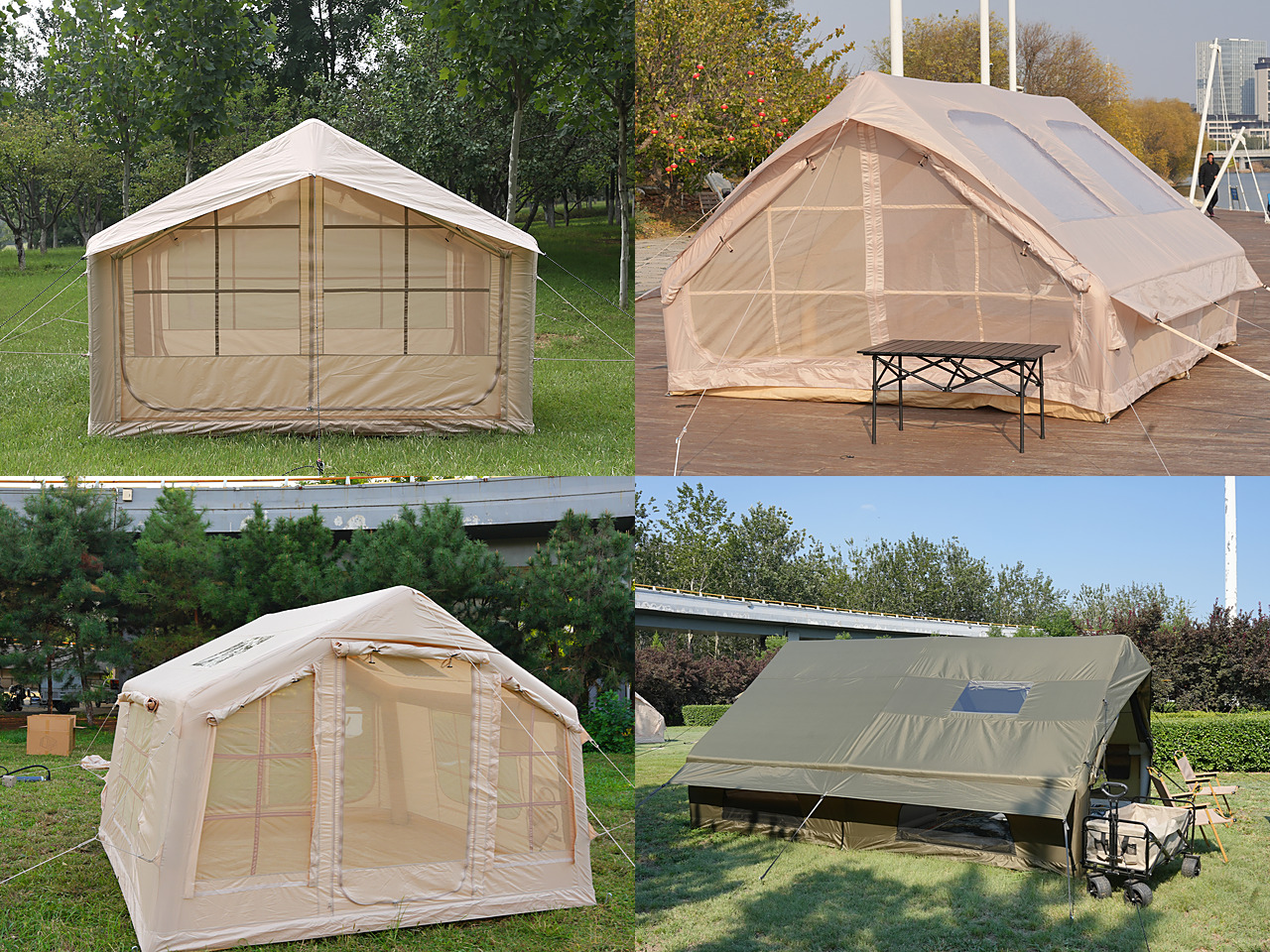
Best Inflatable Tent Sizes for Family Camping: 6.3 to 17.28 m²
The best family inflatable tent is not necessarily the largest one. It is the model that gives your family enough sleeping space, convenient access, useful ventilation and manageable transport without wasting pitch area. Comparing floor sizes from 6.3 m² to 17.28 m² makes it easier to match the tent to the trip, the number of occupants and the level of comfort you expect.
This guide compares six popular size classes for a family air tent : 6.3, 7.5, 8, 12, 13.68 and 17.28 m². It also explains how doors, windows, headroom, packed size and furniture affect the final choice.
Best overall approach: choose 6.3–8 m² for compact, mobile family camping; consider 12–13.68 m² when you want separate living functions or longer stays; and use 17.28 m² for large-family comfort, substantial furniture or premium glamping-style layouts.
Family Inflatable Tent Size Comparison
Size
Best For
Main Advantage
Planning Note
6.3 m² Couples and compact families Efficient transport and pitch size Keep furniture minimal
7.5 m² Small-family weekends Good balance of comfort and mobility Plan door clearance carefully
8 m² Small families with more gear Flexible rectangular layout Check bed and luggage zoning
12 m² Longer family stays Room for sleeping and living functions Requires a larger vehicle and pitch
13.68 m² Comfort-focused families and rentals More furniture and circulation space Confirm site and storage logistics
17.28 m² Large families and glamping layouts Maximum zoning flexibility Plan anchoring, transport and staffing
Capacity depends on the beds, furniture and equipment placed inside. Use this table as a comparison framework, then confirm the dimensions and recommended use of the selected model.
6.3 m²: Compact and Easy to Integrate into a Trip
A 6.3 m² inflatable tent is a practical choice for couples, a parent with children or a compact family layout that prioritizes mobility. It occupies less pitch space and is generally easier to store and transport than a large cabin tent.
The layout works best when beds and luggage are planned in advance. Avoid oversized furniture, keep the route to the door clear and use vertical organizers where appropriate. Models such as the AT-6.3 Pro inflatable tent demonstrate how different door, window, skylight and accessory configurations can adapt a compact footprint to different markets.
Choose 6.3 m² when: vehicle space is limited, trips are relatively short, the normal group is small and the site uses compact pitches.
7.5 m²: A Balanced Small-Family Size
The 7.5 m² category adds useful room without moving into a large packed format. A rectangular floor can accommodate sleeping equipment along the sides while preserving a central route. Wide or double-opening doors improve access when children, bedding and camping boxes move in and out frequently.
The AT-7.5-43L Double Wide Door Inflatable Tent has a 3.1 × 2.45 m footprint. For family buyers, the important point is not only the area but how the doors, windows and beams work with the sleeping layout.
Choose 7.5 m² when: you want a comfortable weekend tent for a small family and still need practical handling and storage.
8 m²: More Flexibility for Gear and Ventilation
An 8 m² air tent offers a useful step up in layout freedom. The AT-8-53L Green Inflatable Cabin Tent , for example, uses a 3 × 2.65 m cabin-style footprint. That shape can provide practical wall-side storage and a clear central zone.
This size is well suited to families who carry more bedding, cooking equipment or activity gear. Window and mesh-door placement becomes especially important because furniture should not obstruct ventilation.
Choose 8 m² when: a compact family tent feels too tight, but you do not need a separate living room or large glamping layout.
12 m²: A Family Base Camp with Living Space
A 12 m² inflatable tent can function as a true base camp. The additional floor area supports clearer separation between sleeping, luggage and indoor sitting areas. This is valuable on longer holidays and during wet weather, when the family spends more time inside.
A model such as the AT-12 High-Side Inflatable Cabin Tent uses a 3 × 4 m footprint. Before buying, confirm that the campsite can accommodate the full anchored area, not only the tent floor.
Choose 12 m² when: comfort on multi-day trips matters more than minimum packed volume, and the vehicle and pitch can support a larger tent.
13.68 m²: Comfort for Longer Stays and Rental Use
The 13.68 m² class provides additional circulation space for beds, storage and furniture. It is suitable for comfort-focused family camping, extended stays and rental programs that need a spacious cabin-style unit without moving to the largest category.
The AT-13.68 Heavy-Duty 420D Oxford Inflatable Cabin Tent is positioned for buyers who value a larger interior and robust material specification. Commercial buyers should also assess cleaning access, replacement components and repeated setup procedures.
Choose 13.68 m² when: the tent will be furnished, occupied for longer periods or used in a rental fleet where perceived space is an important selling point.
17.28 m²: Large-Family and Premium Glamping Space
A 17.28 m² inflatable tent offers the most layout flexibility in this comparison. A 3.6 × 4.8 m floor can support larger beds, clear walkways, luggage and a defined sitting area. The 17.28 Beige Inflatable Air Tent is suitable for large-family comfort, glamping accommodation and buyers who want a spacious cabin environment.
The trade-off is greater demand on transport, storage, pitching area and anchoring. A larger tent should be selected because the space creates real value—not simply because it is the biggest option.
Choose 17.28 m² when: spacious accommodation is a priority and the operator can support the complete site, transport and maintenance requirements.
What to Compare Beyond Floor Size
Air-beam structure and valves
Review the air-beam diameter, valve type, inflation procedure and replacement options. The system should be easy to inspect and compatible with the intended frequency of use.
Fabric and seam construction
Fabric specification affects weight, handling, durability and weather performance. Compare the complete construction—including coatings, seams, floor and zippers—rather than relying on a single fabric number.
Doors, windows and mesh panels
Family tents need convenient access and controlled ventilation. Multiple openings can improve airflow and make the layout more flexible, but they must remain unobstructed after furniture is installed.
Weather and anchoring
Check the instructions for guy lines, stakes and weather limitations. Tent performance depends on correct setup, ground conditions and ongoing inspection. Never treat floor area as a substitute for weather suitability.
Packed size, weight and storage
Make sure the packed tent fits the vehicle and can be handled by the available people. Commercial operators should measure storage racks, transport routes and drying areas before standardizing a fleet.
Which Size Should Your Family Choose?
Choose 6.3 m² for a compact setup and efficient travel.
Choose 7.5–8 m² for a balanced small-family tent with more practical interior room.
Choose 12 m² for a multi-day family base camp with a living function.
Choose 13.68 m² for comfort-focused camping, furnished use or rentals.
Choose 17.28 m² for large-family layouts and premium space.
Frequently Asked Questions
What is the best inflatable tent size for a family of four?
Around 7.5–12 m² is a useful starting range, depending on bed type, trip length and equipment. Compact sleepers may fit a smaller model, while camp beds, furniture and wet-weather living require more space.
Is a 6.3 m² air tent large enough for family camping?
It can work for a small, carefully planned family layout. Draw the beds and luggage to scale before deciding, and make sure the door and ventilation openings remain clear.
When should I choose a 17.28 m² inflatable tent?
Choose it when spacious circulation, substantial furniture or a premium glamping-style layout is more important than minimum transport and storage requirements.
Do inflatable tents need extra space outside the floor dimensions?
Yes. Guy lines, stakes, awnings and safe access require additional pitch space. Follow the anchoring plan for the specific model.
Request a family air tent recommendation. Tell us your target group size, preferred floor area, climate, fabric, door configuration and order quantity. Contact Tianjin Tent Outdoor Products Co., Ltd. at export@cntjtent.com for wholesale and OEM options.