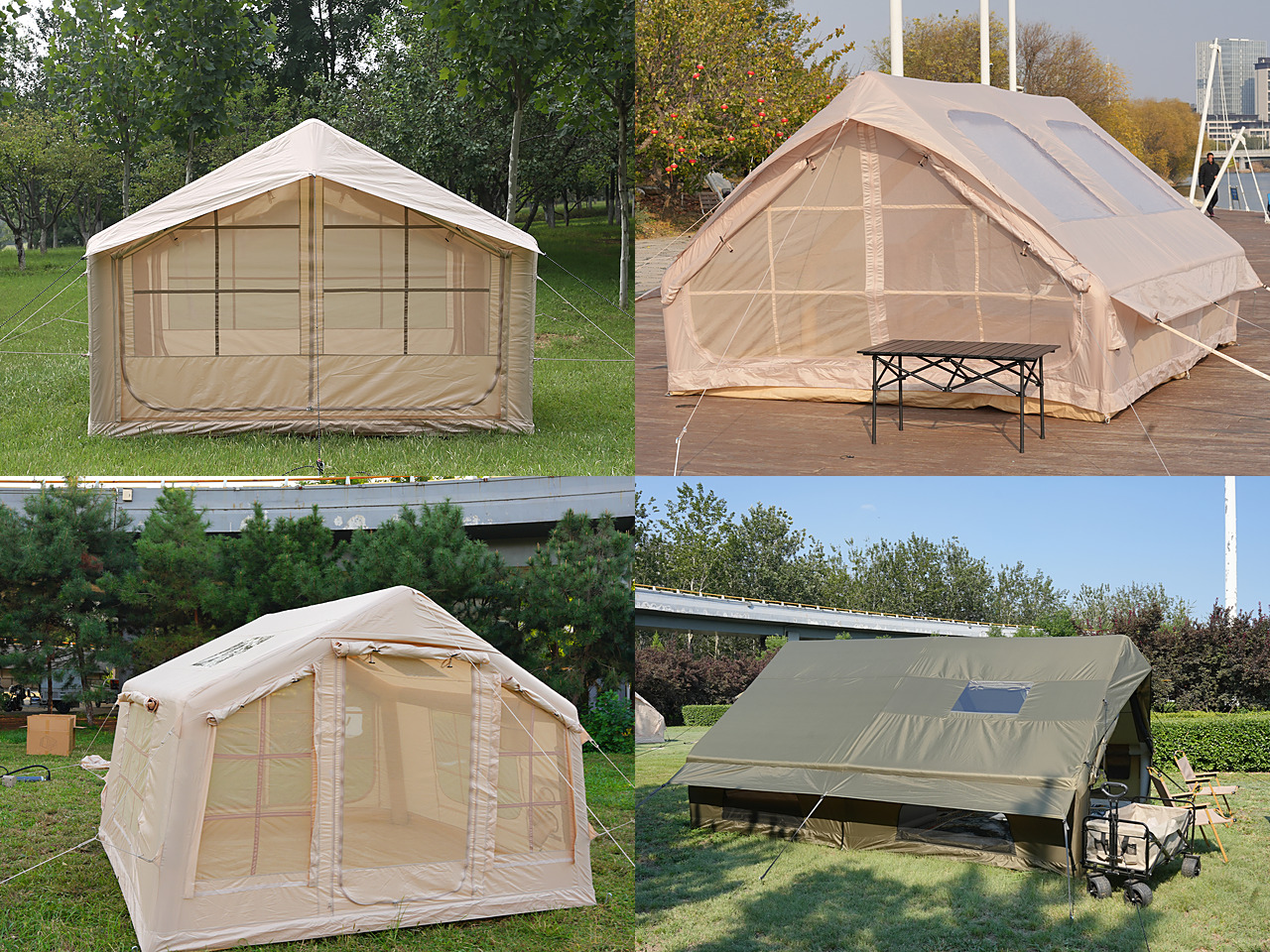
How to Choose the Right Inflatable Tent Size for Camping and Glamping
Choosing an inflatable tent is not simply a matter of matching a model to the number of people printed on a label. The right inflatable tent size depends on how people will sleep, how much equipment will stay inside, whether the tent will be used for short camping trips or longer glamping stays, and how much usable space is available at the site.
This guide explains how to compare floor area, internal layout, packed volume and operating conditions so that campers, retailers, rental businesses and glamping operators can select an air tent for camping that is comfortable without being unnecessarily large.
Quick answer: Choose a tent by usable floor area and layout, not nominal capacity alone. Allow space for beds, a clear passage, luggage and ventilation. For frequent transport, balance interior comfort against packed size and weight. For glamping or multi-day use, prioritize standing room, zoning and operational access.
1. Start with the Real Use Case
Before comparing dimensions, define what the tent must do. A weekend shelter for two adults has different requirements from a family base camp, a rental unit or a furnished glamping room. The same floor area can feel spacious with sleeping mats and crowded with raised beds, tables and luggage.
Weekend camping: prioritize manageable transport, fast pitching and enough dry storage for personal equipment.
Family camping: allow separate sleeping and circulation zones, especially when children need to move around at night.
Long-stay camping: add space for furniture, changing, wet-weather use and organized storage.
Glamping: plan the tent as a guest room, with bed access, luggage space, furniture and service clearance.
Rental or wholesale programs: consider repeat setup, cleaning time, packed volume, spare parts and the range of customer group sizes.
2. Floor Area Is More Useful Than a Capacity Number
A capacity number normally describes how many sleeping positions may fit. It does not automatically include comfortable walkways, bags, furniture or a living area. Square metres provide a better starting point because they let you plan an actual layout.
Draw the floor plan to scale and place the largest items first. A sleeping mat requires less space than a camp bed, and a double bed needs clearance on at least one side. Then add luggage, a central passage and an area where the door can open without obstruction. This simple exercise prevents the most common sizing mistake: choosing a tent that technically fits the occupants but cannot support the way they intend to use it.
A practical space allowance
For basic overnight camping, the sleeping footprint may dominate the layout. For comfortable family use, reserve additional circulation and storage space. For a furnished glamping unit, usable space around the bed is often as important as the bed itself. Local safety and accommodation rules may also specify minimum clearances or occupancy limits, so commercial operators should verify applicable requirements before purchasing.
3. Use This Inflatable Tent Size Guide
Floor Area
Typical Use
Planning Priority
About 6.3 m² Couples, compact family trips, mobile rental stock Efficient bed and luggage placement
About 7.5–8 m² Small families and longer weekend stays Door access, standing room and ventilation
About 12 m² Family base camps and entry-level glamping Separate sleeping and living functions
About 13.68 m² Extended stays, commercial rentals, furnished layouts Furniture clearance and service access
About 17.28 m² Large families, premium glamping and spacious accommodation Zoning, site footprint and transport planning
These are planning categories rather than fixed occupancy ratings. Bed style, equipment and local rules can change the appropriate capacity. Always confirm the internal dimensions and intended layout for the specific model.
4. Check Shape, Wall Angle and Standing Height
Two tents with the same floor area may not offer the same usable volume. Cabin-style air tents generally provide more practical space near the walls, while steep or sloping roofs can reduce headroom at the edges. A tall central point is useful, but consistent standing height across the main walkway is often more valuable.
Look at door height, wall angle and the position of the inflatable air beams. Make sure the beams do not interfere with bed placement or storage. Wide doors can improve access for furniture and simplify cleaning, while multiple openings can support airflow and flexible site orientation.
5. Plan for Gear, Furniture and Wet Weather
Every occupied tent collects equipment. Shoes, pumps, bedding, food boxes and clothing quickly reduce usable floor space. If the tent may be used in rain, occupants also need an area where wet items can be separated from sleeping equipment.
For family use, a useful layout normally includes:
a direct path between the entrance and sleeping area;
dedicated luggage space that does not block windows or doors;
clearance around inflatable beams and valves;
room to sit indoors during poor weather;
ventilation openings that remain accessible after beds are installed.
6. Confirm the External Site Footprint
The listed floor dimensions are not the complete site requirement. Guy lines, stakes, awnings and safe clearance around the tent all require additional ground. Measure the entire pitch, check for roots or sharp objects, and leave enough working space for inflation, anchoring and inspection.
Commercial sites should standardize the pitch size for each model. A consistent site plan improves installation speed, guest circulation and maintenance access. It also helps operators avoid ordering a large tent that fits the floor plan but not the real plot.
7. Balance Interior Space with Transport and Setup
A larger family inflatable tent offers more comfort, but it also increases packed volume, fabric area and handling requirements. Ask who will carry the packed tent, what vehicle will transport it, where it will be stored and how often it will be erected.
For mobile camping, the best size is usually the smallest model that supports the planned layout comfortably. For semi-permanent glamping, a larger tent may be justified because transport frequency is lower and guest experience has greater commercial value.
8. Match the Size to Climate and Ventilation Needs
More interior volume can improve comfort in warm conditions, but ventilation design still matters. Check the number and location of mesh doors, windows and roof vents. In cooler or windy environments, the tent must be fully anchored, and openings should be managed without compromising safe airflow.
No tent size removes the need to follow weather guidance. Operators should establish wind, rain and evacuation procedures based on the product instructions and local conditions.
9. A Five-Step Buying Method
Define the occupants and trip length. Separate occasional maximum capacity from the normal comfortable capacity.
Draw the interior layout. Add beds, bags, furniture and a clear route to the exit.
Measure the complete pitch. Include guy lines, awnings and maintenance clearance.
Check logistics. Confirm packed dimensions, weight, storage and the people available for setup.
Compare construction details. Review fabric, seams, air-beam system, valves, doors, windows and included accessories.
10. Common Inflatable Tent Sizing Mistakes
Buying only by the advertised person count.
Forgetting luggage, furniture and indoor wet-weather space.
Measuring the tent floor but not the full anchored footprint.
Choosing maximum space without checking packed volume or handling.
Ignoring door position and air-beam placement when planning beds.
Using a consumer camping layout for a commercial glamping operation.
Frequently Asked Questions
What size inflatable tent is best for a family?
It depends on the number of occupants, bed type and amount of equipment. Around 7.5–8 m² can suit a compact small-family layout, while 12 m² and above provides more flexibility for longer stays, furniture and indoor living space.
Is a larger inflatable tent always better?
No. Extra space improves comfort but can increase packed size, weight, pitch area and handling time. Choose the smallest size that supports the real layout and operating conditions.
How much extra pitch space should I allow?
Allow space beyond the floor dimensions for guy lines, stakes, doors, awnings and safe access. The exact requirement depends on the model and anchoring instructions.
Can the same air tent be used for camping and glamping?
Yes, if its size, construction and layout meet both uses. A glamping setup usually needs more furniture clearance, presentation standards and maintenance planning than a basic camping layout.
Need help selecting a size? Tianjin Tent Outdoor Products Co., Ltd. supplies inflatable tents from compact camping models to large family and glamping layouts. Send your target capacity, bed plan, climate and order quantity to export@cntjtent.com for a model recommendation and OEM discussion.